Most sheet metal parts can be made more than one way. A flat bracket with a few holes can be laser cut from sheet, machined from plate, or stamped in a die. All three routes can produce a good part. What changes is what you pay up front, what you pay per piece, how long you wait for the first one, and what the cost looks like when you need thousands more.
Here is how we weigh the choice when a new print comes in.
Start with the shape of the part
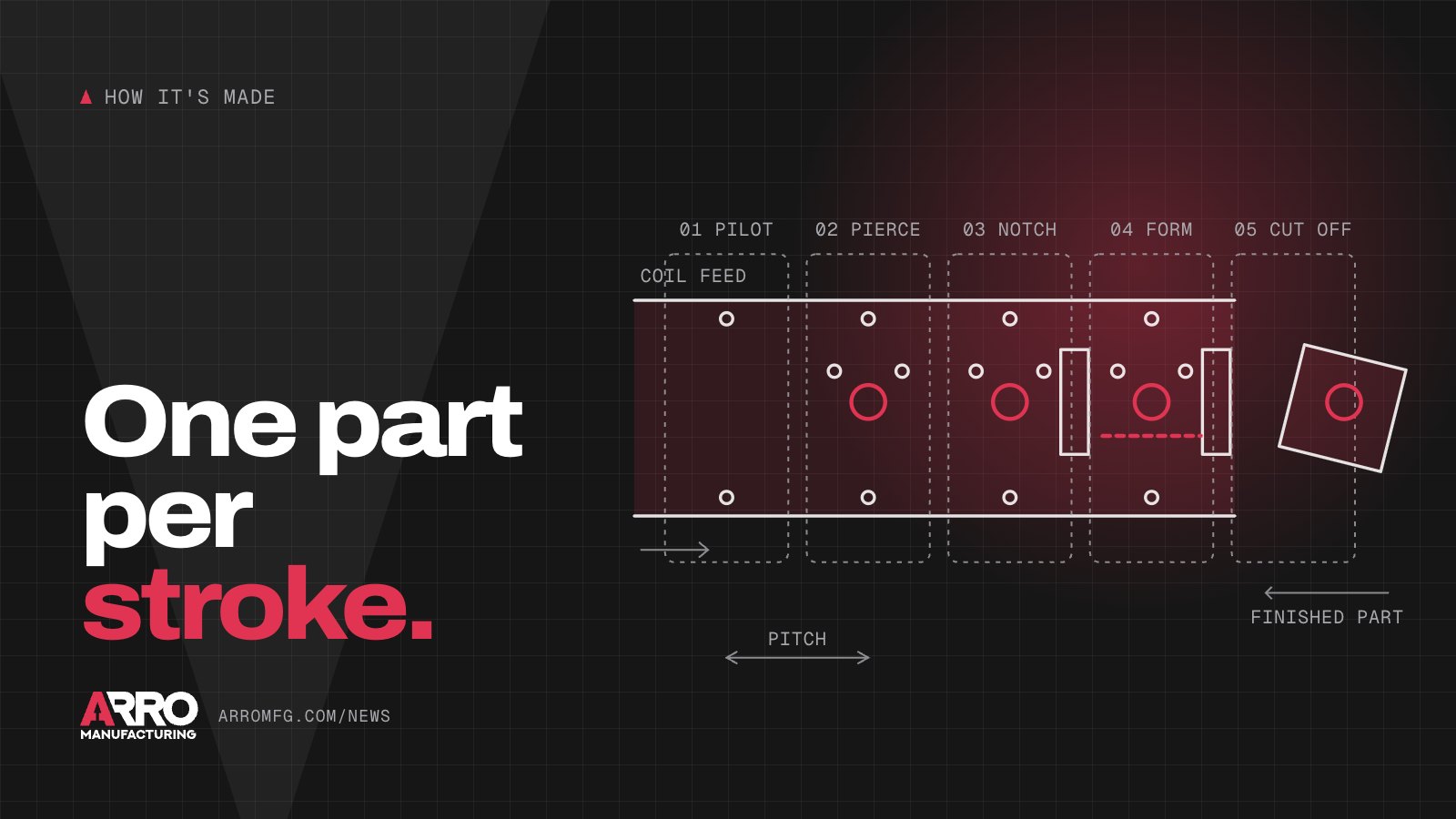
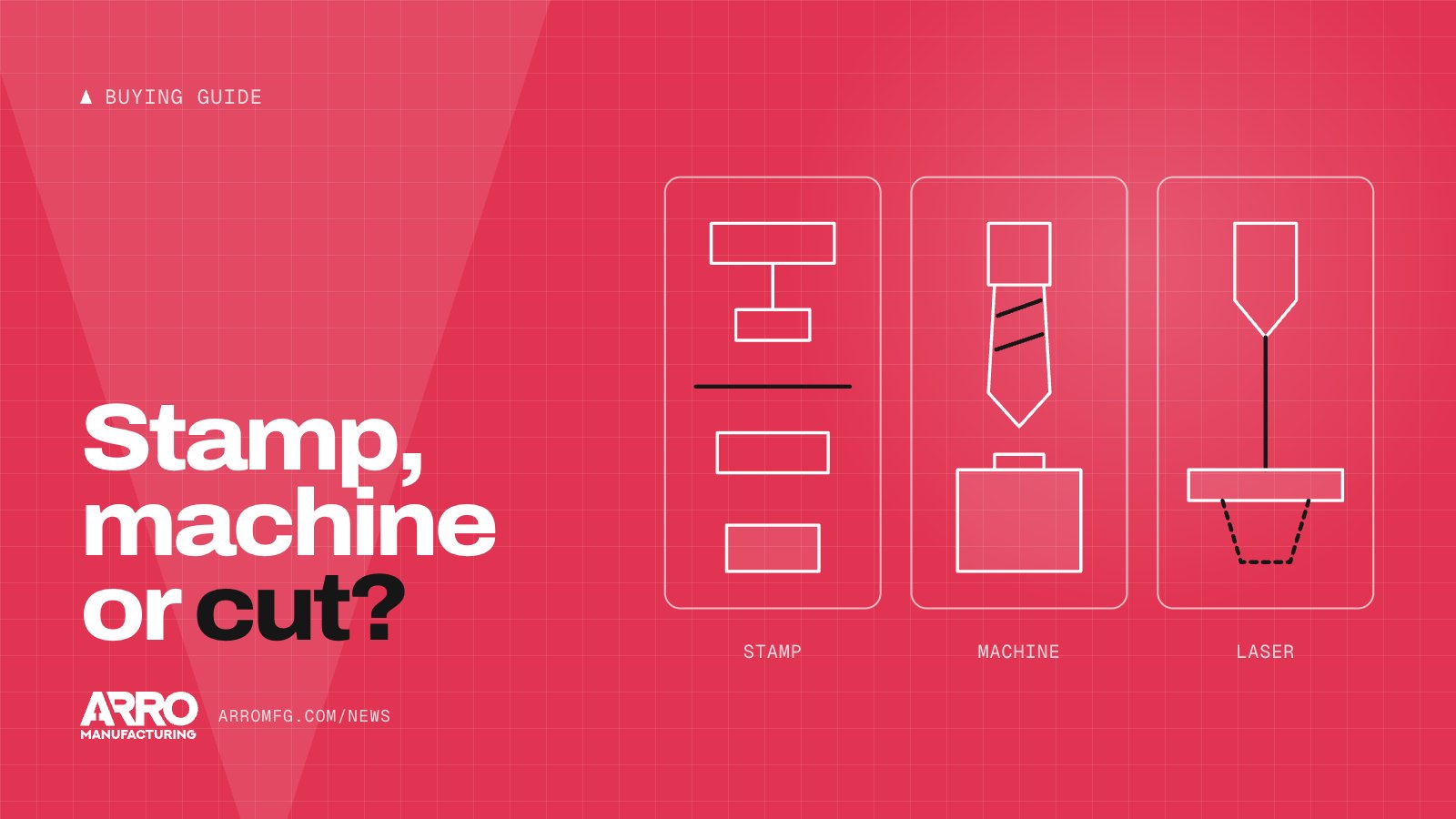
- Stamping fits parts that start as sheet or coil: brackets, clips, clamps, shields, terminals, housings and anything with bends, embosses, formed tabs or pierced holes. A die cuts and forms the metal on each press stroke, and a progressive die performs several operations in a row as the strip feeds through it.
- Machining fits parts that are thick or blocky, or that need pockets, threads, bores or features on several faces. It is also the answer for precise surfaces a press cannot form. Wire EDM handles hardened material and fine internal profiles.
- Laser cutting produces flat profiles from sheet and plate, including complicated outlines, with no tooling at all. It does not form anything, so a laser cut blank that needs bends has to go to a separate forming step.
A solid block is a machining job. A deep formed housing is a stamping job. The real decision comes with flat or lightly formed sheet parts, where all three could work.
Tooling cost versus piece price
This is the center of the decision. Laser cutting and machining need little or no dedicated tooling. You pay mainly for programming, setup and machine time, so the price per part stays fairly flat from a handful of parts to several thousand.
Stamping works the other way. The die is a real investment that has to be designed, built and tried out before the first good part. Once it runs, each press stroke makes a finished part (sometimes more than one), so the piece price is usually far lower. The tooling cost is spread over every part the die makes in its life.
Picture two lines on a chart. The first is the total cost of laser cut or machined parts: it starts near zero and climbs steeply with each piece. The second is the total cost of stamped parts: it starts higher because of the die, then climbs slowly. The point where the lines cross is your break-even quantity. Below it, the process without tooling costs less. Above it, stamping costs less, and the gap widens with every part you buy.
Where that crossing point falls depends on the part: its size and material, how complex the die has to be, and what the alternative costs per piece. That is why we ask about annual usage and how many years a part will be in production, along with the size of the first order. A part you will buy for years can justify a die that a one-time order cannot.
Lead time, tolerances and material use
Lead time to first part. Laser cutting is usually fastest because there is nothing to build. Machining is close behind for most parts. It needs programming and a way to hold the part, but no die. Stamping takes the longest to reach a first part, since the die has to be designed, built and proven. After that, production runs are quick, and reorders do not wait on new tooling.
Tolerances. Machining generally holds the tightest dimensions, especially on bores, flat faces and features that locate other parts. Stamping is known for consistency: every part comes out of the same die, so part-to-part variation is low. Pierced features tend to hold closer than formed ones, because bends spring back slightly after forming. Laser cut profiles are accurate, but the cut edge sees heat and may need cleanup for some applications.
Material use. Laser cutting nests parts on a sheet, and the skeleton left behind is scrap. Machining starts with bar or plate and turns much of it into chips, which adds up on parts that start as big blocks. Stamping feeds a strip, and a good die designer lays out that strip so parts nest tightly and the carrier wastes as little as possible. On long runs, material is often a large share of the piece price, so strip layout gets real attention.
Moving from prototype to production
You do not have to pick one process for the life of the part. A common path is to prove the design with laser cut or machined prototypes, then move to stamping once the design is stable and the volume justifies a die.
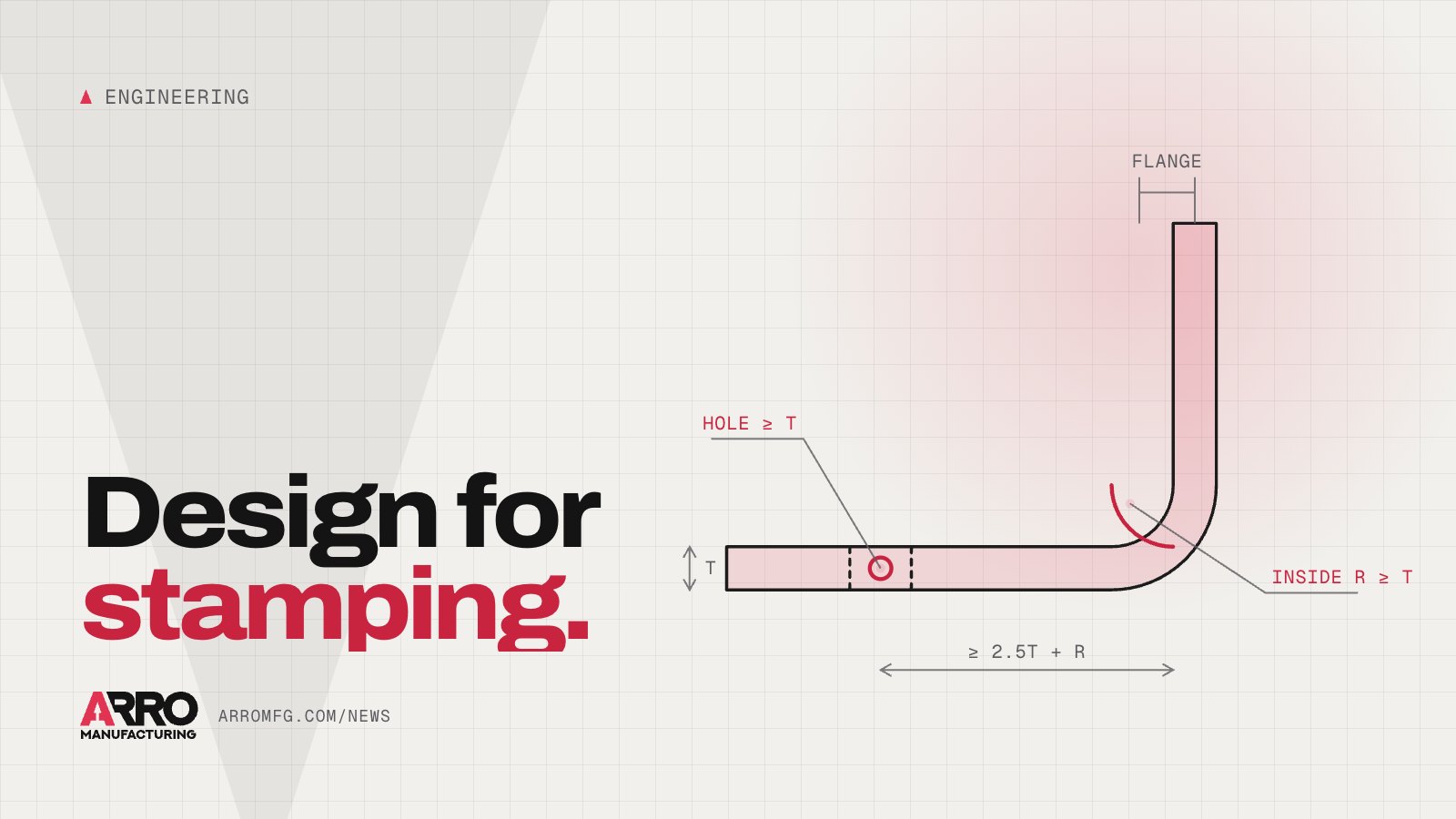
The catch is that a prototype and a stamped part are not always the same part. Bend radii, hole edges, burr direction and formed features can come out differently, so a part that passed testing as a prototype may behave a little differently off a production die. Plan to check the first stamped parts before you release full production.
Prototype tooling bridges that gap. A simpler, lower-cost die, or a set of single-hit dies, can make parts by the actual stamping process before you commit to a full progressive die. You get real stamped parts for fit checks and testing, and problems show up while they are still cheap to fix. At lower production volumes, single-hit dies can stay in service as the production tooling. Progressive dies pay off at higher volumes, where speed per part matters most.
The cheapest process for the first order is not always the cheapest over the life of the part.
Arro started in 1952 as a two-man die shop, and we still design and build our stamping dies, fixtures and prototype tooling in house. We run presses from 15 to 600 tons alongside precision machining and Wire EDM, and we work from prototypes through low to moderate-high production volumes. If you are not sure which route fits your part, share the drawing and your expected volumes, and our engineers will tell you what they would recommend and why. Request a quote to get started.