A quote is only as good as the information behind it. When a request arrives with a clean drawing, a 3D model and real volume numbers, our engineers can price the tooling and the part with confidence. When pieces are missing, we have two choices: stop and ask, or make assumptions and price in enough margin to cover them. Neither one helps you.
Here is what to include, and what happens after you send it.
The drawing, the model and the revision
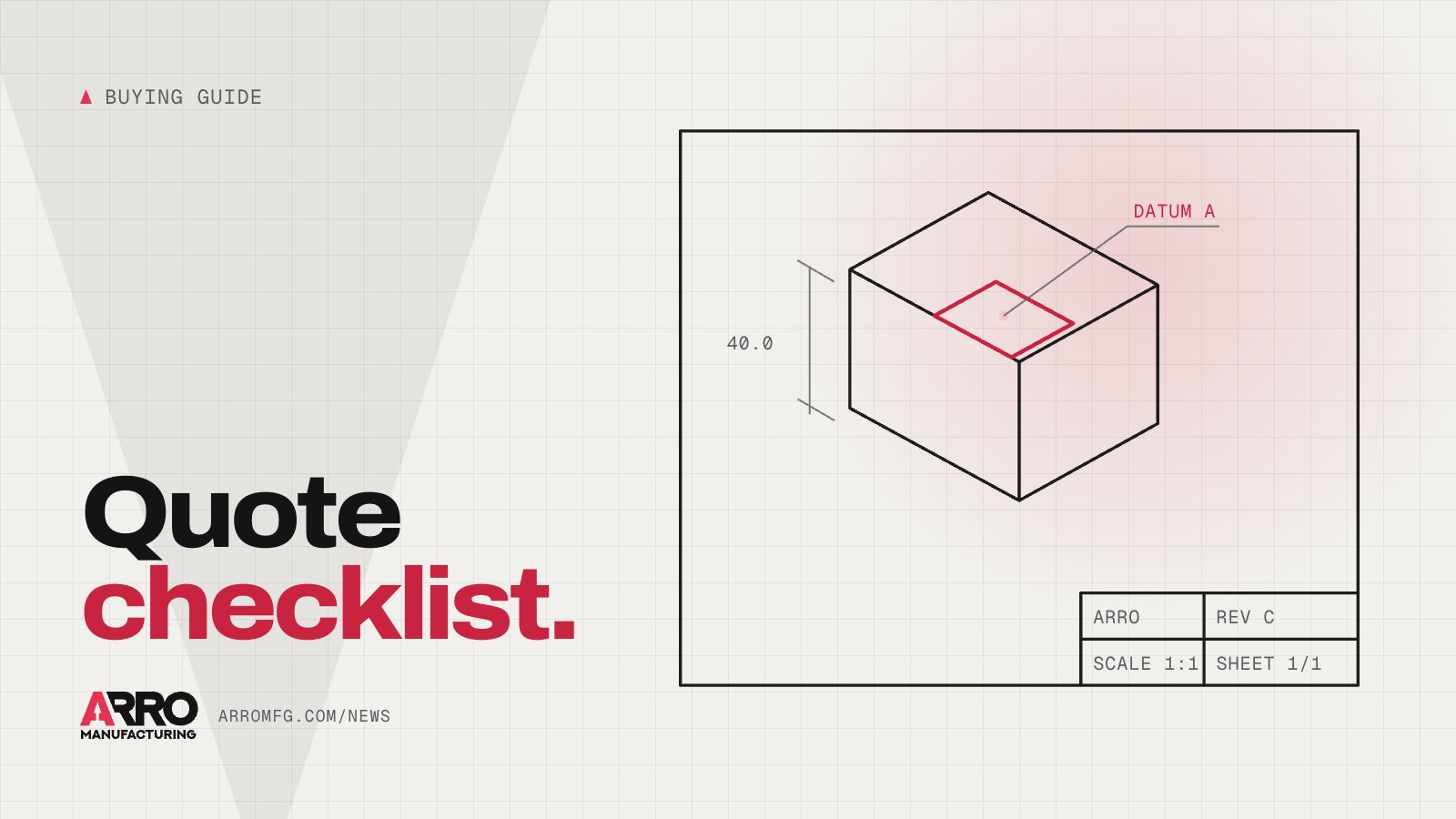
- A drawing in PDF. The drawing is the controlling document. It should carry the dimensions, tolerances, notes and title block, including the revision level.
- A 3D model in STEP. A model lets us check geometry, develop the flat blank and start planning the die. IGES works too. For flat parts, a DXF or DWG is helpful.
- Matching revisions. Make sure the drawing and the model are the same revision. If a change is already planned, tell us now, since it can change the tooling.
- Sample parts or photos. If we are replacing an existing part, a sample or a few clear photos answer questions a drawing sometimes cannot.
The quote form on our site takes PDF, DXF, DWG, STEP, IGES and image files, up to five files and 8 MB in total. If your package is bigger than that, send the drawing and model first and mention what else you have.
Every missing detail turns into either a question we have to ask or an assumption we have to price.
Material, finish and secondary work
Give the full material callout: alloy, temper or hardness, and any specification the material has to meet. State the thickness as a decimal. Gauge numbers mean different thicknesses in different metals, so a decimal leaves no room for doubt. If you would accept an alternate material, say so, since it can help with cost and availability.
Then list everything that happens to the part after it is formed: heat treating, plating, painting or other coatings, and any finish spec. The same goes for welding, hardware or assembly. These steps affect the process, the price and the schedule, so they belong in the request from the start.
Quantities, timing and delivery
Volume decides what kind of tooling makes sense, so we ask for two numbers:
- Annual usage. Your best estimate of how many parts you will use in a year, and roughly how long the part will stay in production. This tells us whether a progressive die, single-hit dies or prototype tooling fits the job.
- Release quantities. How many parts you want per order or per delivery. This drives setups, material purchases and how much inventory sits on the shelf.
Tell us your target timing for prototypes, first production parts and ongoing deliveries. Include packaging needs (bulk, layered, special containers, labels) and how you want parts delivered. On some parts, packaging and freight are a real part of the cost, and it is better to price them in than to discover them later.
Critical features and existing tooling
Mark the dimensions and tolerances that matter most for fit and function. If a feature is critical, flag it on the print or in your note. That tells our engineers where the die design needs the most attention and what to check most closely on first parts. If you have specific inspection or documentation requirements, include those too.
Tell us about tooling. If you own a die that is running somewhere else, let us know where it is, what shape it is in and whether drawings for it exist. Running an existing tool and building a new one are very different quotes, so we need to know which one we are pricing.
What happens after you send it
Every shop works a little differently. At Arro, a request generally moves through these steps:
- Engineering review. Our engineers review the print and model for manufacturability: how the part will be made, what kind of die it needs and which features will be hardest to hold.
- Questions and suggestions. We may come back with questions, or suggest a change that would make the part easier or less expensive to make. You own the design, so nothing changes without your approval.
- Quote. We quote the tooling and the piece price.
- Die design and build. Once you place the order, we design the die in 2D and 3D CAD and build it in house.
- Tryout and first parts. We run the new die, check the first parts against your print and adjust the tool until the parts are right.
- Production and shipping. Parts run to your release schedule, go through any finishing or secondary operations, and ship packed the way you asked.
Arro has been designing and building dies since 1952. Our goal is zero defects: parts you can put straight into production without inspecting them. That starts with a complete, accurate quote. When your package is ready, send it through our quote form or call us at 716-217-6800.